20 Reasons Why Fair Pay is Important
20 Reasons Why Fair Pay is Important

We are proud to be an accredited Real Living Wage employer, but we are also committed to promoting fair pay. To celebrate 20 years of the Real Living Wage Movement, here are 20 reasons why fair pay is important, for people, for companies and for society.
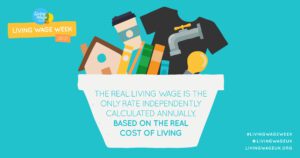
- 1 in 6 workers in the UK earn less than the cost of living. Living costs are rising, so this problem is going to get worse. The most fundamental way that a business can contribute positively to society is by paying a fair wage for a day of work. To ensure a wage is fair, it needs to be based on the actual cost of surviving and thriving in society today.
- This statistic includes many health and social care workers, upon whom the vast majority of us depend for care for ourselves or our loved ones at some point in our lives. An investment in their livelihoods benefits almost everyone else in society.
-
The Joseph Rowntree Foundation found that 75% of children living in poverty in the UK live in a working family. If fairness is one of your values, this will feel like an uncomfortable statistic.
- Low pay disproportionately affects women in society, so tackling it is another important step towards gender equality.
- In-work poverty is at a record high. Millions of low-income families are facing winter unsure whether they are going to be able to pay for basic essentials such as food and utilities. People can’t plan for the future when they are living hand to mouth, day to day.
-
Struggling to afford living costs has a devastating impact on both mental and physical health. Only people who are happy and healthy can perform at their best.
- With nothing extra left in their wage, it’s impossible for workers to get themselves out of debt.
- Poverty doesn’t just affect the individual worker and their families, but has knock-on effects on the whole of society – which make this an important issue for everyone to consider, employers perhaps most of all.
- Having nothing left in your wage for little luxuries or pleasures saps the joy out of life. This may mean that staff feel unmotivated and unhappy at work.
BUT…
10. Increasing pay to a level in which people feel that life is more affordable increases motivation, commitment, and improved relationships between staff and managers.
11. The Living Wage Foundation reports that paying the Real Living Wage helps companies increase staff retention by 25%.
12. 93% of accredited Living Wage employers report that they have benefited from accrediting.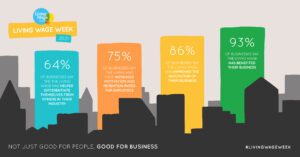
13. Becoming an accredited Living Wage employer is clear marker of your values and ethics as a business. Studies have shown improved reputation to be the single biggest direct benefit to an organisation of paying the real Living Wage.
14. Paying employees fairly may seem like an expense, but it is an investment into the long-term success of your organisation.
15. A commitment to accreditation with the Living Wage Foundation during the pandemic has led to an acceleration of health and social care pay rises, helping staff to stay well so that they can care for others, and helping our health services recruit and retain staff at a time of desperate shortage – this is one step towards alleviating a national crisis.
16. When people have security for their basic needs, they are better employees.
17. When people have security for their basic needs, they are better contributors to society.
18. The whole country benefits when wages rise – there is an increase in tax contributions, reduced welfare spending and the economy is boosted by consumer spending power.
19. Unlike the ‘national living wage’ the real Living Wage is calculated on the actual costs needed to live. This makes it around a pound an hour higher than the minimum wage and the national Living Wage – with an uplift for those in London. This seems the only fair way to do it.