Good Employment Week 2026 | What Good Work Feels Like
Good Employment Week 2026 | What Good Work Feels Like
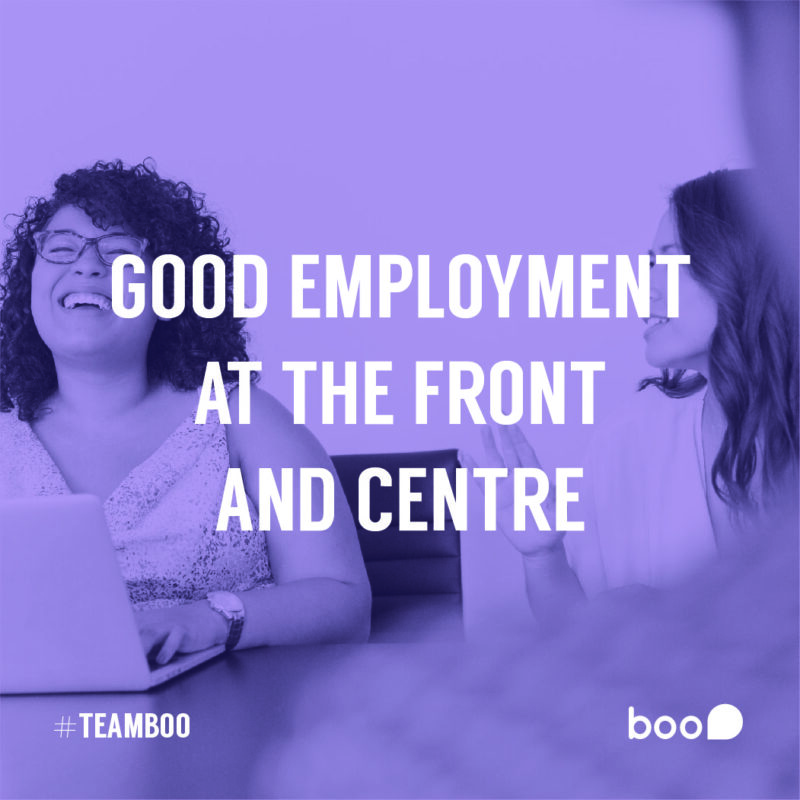
Good Employment Week 2026: What Does Good Employment Really Feel Like?
What does good employment mean to you?
It’s Greater Manchester Good Employment Week 2026, and this year’s campaign is centred around one simple question: what does good employment mean to you?
It’s a question we really like at Boo because there isn’t one single answer. Good employment is made up of lots of things, from fair pay and secure work to flexibility, inclusion, wellbeing and opportunities to develop.
However, there is another part of good employment that can be harder to measure: how it actually feels to work somewhere.
Do people feel valued? Can they speak honestly when something isn’t working? Do they feel trusted to make decisions? Can they ask for help without worrying about how it will be perceived? Do managers know their people well enough to notice when something has changed?
These everyday experiences matter because they shape our relationship with work.
Good employment is about everyday experience
Organisations can have excellent policies and still create a poor experience for their people. Equally, some of the things that make the biggest difference to our working lives can appear surprisingly small.
A manager who takes the time to listen properly can make a difference. So can receiving a genuine thank you, being trusted to make a decision or having a conversation about workload before someone reaches breaking point.
Good employment comes alive through these everyday interactions. It is shaped by culture, relationships and, importantly, by the people who manage and lead others.
That’s why our purpose at Boo has always been pretty straightforward: we want to help bosses be better bosses.
Not perfect bosses. Better ones.
Connecting good employment with happiness at work
Earlier this year, we launched our BOOprint for Happiness at Work. It brings together much of what we have learned from more than a decade of working with leaders, managers, teams and organisations.
The BOOprint explores the conditions that help people flourish at work, including good leadership, psychological safety, purpose, belonging and wellbeing.
We created it because workplace happiness is sometimes misunderstood. It isn’t about expecting everyone to arrive at work cheerful every morning. It isn’t about compulsory fun, and it certainly isn’t something an organisation can create with a wellbeing initiative once a year.
We are still very much in favour of cake, by the way. We just don’t think cake is a workplace wellbeing strategy.
For us, happiness at work is about creating the conditions where people can be human, contribute their best and feel that their work matters.
The role of managers in creating good work
If we want to improve the experience of work, we need to support the people who have one of the biggest influences on that experience: managers.
Many managers are trying to lead teams through increasing pressure, organisational change, financial challenges and competing demands. At the same time, they are expected to support wellbeing, manage performance, have difficult conversations, develop people and create inclusive teams.
That is a lot to ask, particularly when many people move into management because they are technically good at their job rather than because they have been taught how to lead people.
Supporting managers to listen, coach, communicate, recognise strengths and have better conversations can have a significant impact on the culture around them. Good management isn’t an optional extra within a good employment strategy. It is one of the ways employees experience that strategy every day.
Happier workplaces are not just a nice idea
There can still be a tendency to place happiness, wellbeing and good employment in the “nice to have” category. We think that misses the point.
When people feel safe, supported, connected and well led, they are in a much better position to contribute, collaborate, learn and perform. Creating healthier workplace cultures can also support retention, reduce absence and help organisations keep good people.
This matters even more as employers respond to increasing concerns about long-term sickness, workplace stress and people leaving the workforce because of ill health.
We cannot solve those challenges with fruit bowls, wellbeing apps or another lunchtime webinar. We need to look more closely at the experience of work itself.
That means thinking about workload, relationships, psychological safety, management capability, belonging, purpose and whether people genuinely feel cared about.
A useful question for Good Employment Week 2026
Perhaps one of the most useful things we can do during Good Employment Week 2026 is create some space for conversation.
Ask your people what good employment means to them. Find out what helps them flourish at work and what gets in the way. Ask your managers what would help them lead their teams better.
Most importantly, be prepared to listen to the answers.
At Boo, we believe happier, healthier workplaces are possible. They are created through lots of everyday choices about how we lead, communicate, listen, support and care for one another.
So this Good Employment Week, rather than simply asking whether your organisation is a good employer, perhaps ask a slightly different question:
How does it feel to work here?
The answer might tell you far more.
Explore the BOOprint for Happiness at Work
Our BOOprint for Happiness at Work is designed to help organisations think differently about workplace happiness and the conditions people need to flourish.
It explores leadership, psychological safety, purpose, belonging and wellbeing, with practical ideas that organisations and managers can use to start better conversations about the experience of work.
Becci x