Reflections on barriers to female entrepreneurship
Reflections on barriers to female entrepreneurship
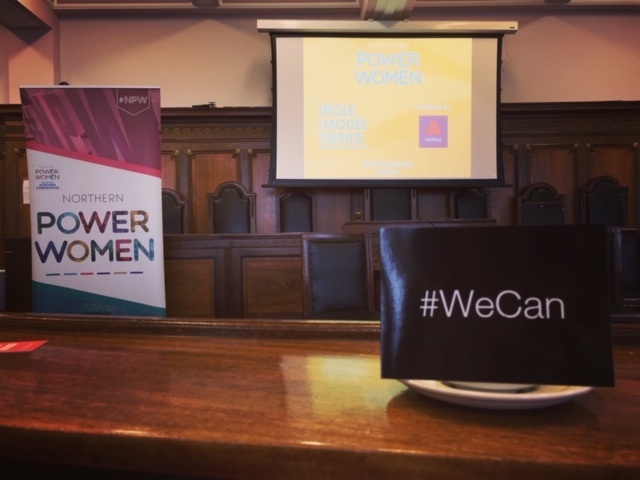
Our inquisitive Amy attended a recent Northern Power Women event, here are some of her thoughts…
Last week I attended a Northern Power Women networking and panel discussion on barriers to female entrepreneurship and how to improve the funding landscape for women.
The recent Rose Report (2019) has identified some of the inhibitors to the growth of companies owned by women and reasons why ‘business’ is still a dominantly male domain.
Here are five:
1. Lack of confidence
Many of the women in the room that day admitted to harbouring doubts about whether they deserved to be there at all. How many more didn’t show up because they didn’t think their venture was big enough, important enough, or worthy enough? There is an expectation amongst the female owners of SMEs that these sorts of events are meant for people who are more corporate, more successful, and perhaps… more masculine?
It should not be embarrassing to admit that traditional networking can be intimidating for many women. One attendee said she wanted to be greeted with, “welcome, let’s have a conversation,” rather than jargon, unsolicited business cards and a hard sell. She wanted more empathy and warmth and less ‘feeling out of place at a Boys’ Club’ #sorrydontplaygolf.
Not only are women potentially missing out on investment opportunities and valuable connections by avoiding networking events, a fear of rejection or even the experience of rejection stops them from seeking out funding to help them grow.
2. Unique pressures on women in business
Women are often balancing home and caring duties alongside their businesses. Many in the room felt that they were too busy to attend events and networking opportunities in the hope of maybe making that magical connection. They wanted to know, in advance, whether showing up to something in person would be worth their time – especially if it meant not only leaving their businesses unattended but also paying for childcare.
There were calls for lenders to recognise a need to offer product features like payment holidays on their business loans, for women on maternity leave.
3. Lack of awareness of support
The problem is less that products, services and support don’t exist – they are out there in abundance – and more that there is obviously a disconnect with the target groups that would benefit from these resources.
Because female entrepreneurs often have so many competing demands on their time, information about these things needs to be snappy, succinct and easy to find.
Heather Waters, Enterprise Manager at Natwest, struggles to understand why resources such as their fully-funded Accelerator programme are not widely known about outside the industry. Why is this? Where is the missing link? How do you reach women who are only thinking of starting businesses, and not yet connected to any networks?
4. Marked difference in investment
There is both a disproportionate lack of investment in female-led businesses, and also a lack of female investors.
With the majority of decision makers being male, it was suggested that there might be a conscious or unconscious bias against the types of companies women are more likely to own. Simone Roche, CEO and founder of Norther Power Women questioned whether male investors are less interested in stereotypically ‘girlie’ businesses such as cleaning, hairdressing, therapy, childcare and beauty because they don’t have that industry knowledge.
On the other hand, women are just not pursuing venture capital as much as men. Caroline Turley, a consultant from the Access to Finance team, said that in the last ten years she has spoken to very few female-only applicants seeking finance. She has noticed that numbers of women looking for start-up money have increased a little, but those looking for funding to scale are rarer.
5. Women are naturally more risk averse
Women are less likely to borrow due to a fear of risk to existing assets. They don’t want debt, and this restricts them. As a result, female-led start ups often self fund and keep overheads low, then when they want to scale they use only their own money. This limits even the enterprises with huge potential for growth.
In fact, Sue Barnard of the Northern Powerhouse Investment Fund says 70% of all business (male or female led) would rather avoid taking out a loan to scale. They use their own cash to try and grow but do not want to borrow.
Furthermore, Sue explained, women have also reported that negative experiences of rejected funding applications deterred them from re-applying elsewhere. This links in to the general lack of confidence about how their companies fit into the wider business eco system.
How do we tackle this gender disadvantage?
Here are five ways:
1. Not just boosting confidence but boosting a female sense of entitlement
Women are more likely to talk about their businesses in modest terms. ‘Just a little shop/stall/sideline’etc. Simone wants to ban the word ‘just’ all together. You have a business, you belong.
Crucially, women should not seek empowerment by emulating men, but by using ‘female’ strengths such to advantage. Collaboration, empathy, warmth, social skills and emotional intelligence can create unique opportunities. Women should also harness the power of mentoring – it can be particularly fruitful for women to mentor other women, especially those who have successfully juggled their businesses with young children. Having that narrative from someone who has had a similar journey could really help female entrepreneurs to boost their confidence and sense of achievement, and help tackle the ubiquitous ‘impostor syndrome’.
Lastly, Sue advises women to be a bit more proactive and thick skinned when it comes to failed attempts to get investment. “Reject rejection”, she says. “If you fail, speak to someone else!”
2. Get the information about support, advice and funding out there in the right places
The good news is there’s no lack of resources for small businesses looking for support. The problem is, there’s so much out there it’s overwhelming. The panel agreed that having it all accessible in one place – a ‘one stop shop’ – would be useful, although this would have to be carefully kept on top of to ensure the information given is current.
Quick and easy access to advice and funding can be made available via internet toolkits and portals. However, Caroline insists that the value of one-to-one advice – in person, or on the phone – shouldn’t be dismissed. “The last thing you want is to be handed a list of potential funders”, she says. You need a service that will filter it for you. B2B resources like the Growth Hub offer a diagnostic service, tailored to your specific need. As an Access to Funding specialist she will make those select connections for you herself.
The Rose review identified that there should be an onus on the financial industry to educate and raise awareness of products and help for SMEs. Natwest has arranged or collaborated on a number of free events recently in which they pitch their particular services – such as the accelerator programme, or the ‘Back her Business’ crowdfunding initiative.
However, business owners also need to take a proactive approach. Sarah Turnbull, Director of Commercial Banking at Natwest says “Reach out! Speak to everyone you can. Don’t let banks intimidate you. Banks are very good at signposting, even if they can’t help you directly.” Caroline echoed this sentiment, encouraging everyone in the room to have the confidence to talk and engage with local funding services.
3. Female-friendly networking
One of the female entrepreneurs at the Northern Power Women event spoke out about a need for involved honest conversations during networking, sharing ‘what keeps you up at night’. Women are natural collaborators and rather than competing, confiding – discovering each is struggling with the same problems and the same worries – might boost each other’s confidence and sense of belonging.
Those who felt too busy with the dual pressures of work and home life to do much networking without a guarantee of return were encouraged to get more comfortable with an element of the unknown. The key might be to be selective as to what they attend, for example, perhaps they might feel more comfortable at networking specifically aimed at women. Even here, Simone advises, ‘don’t stay in your own lane, mix with companies of different scale’.
4. Normalise borrowing
To reduce the widespread fear of borrowing it’s important to highlight how common it is for successful businesses to have debt.
Trepidation about borrowing is best tackled by speaking to a specialist on a one-to-one basis. Caroline says that once she’s found a product that suits the needs of a company, she can show them how the business can easily afford repayments whilst achieving their potential returns. In her experience, women definitely take more convincing than men. Mentoring relationships can potentially help here too.
At the same time, lenders need to be aware of what small business owners actually want. At the Invitation to Meet the Small Business Commissioner event on the 8th May, business finance specialist and panelist Pete Wild spoke about there being a difference between what lenders thought customers wanted – low interest rates and borrowing against personal assets, and what people of either gender actually preferred – higher interest rates to protect their family homes.
5. Teach entrepreneurship in schools and level the playing field for the next generation
There are calls for entrepreneurship to be taught in schools, to prepare young people of either gender for starting their own ventures as well as potentially working for others. This challenges the view that entrepreneurship is some kind of innate skill, one that boys are more likely to be born with.
Encouraging girls to engage with entrepreneurship by providing opportunities for hands-on experience, normalising the idea of women in leadership through interaction with role models (perhaps involving parents who are successful businesswomen) and planting the seed amongst girls before they become women (and a ‘hard to reach’ group) will help smooth out some of the stumbling blocks for female leaders of the future.
Summary
The take-away good news from this event is that a turnaround for women in business is happening, but slowly. 39% of half a billion pounds invested by the Northern Powerhouse Fund in the last few years has been to female entrepreneurs. However, Sue says there’s not enough noise about it – women themselves are not shouting about it enough. Perhaps they are too busy to shout? Or too modest. As for me, I left feeling so proud to be part of a female-led business, a successful growing business – one of the relative few.